Pizza makingRoman vs Neapolitan€35–€55Free cancellationUpdated 10 min read
Pizza Making Class in Rome: The Complete Guide
What actually happens in class, the crucial difference between Roman and Neapolitan pizza, the formats and prices to expect, and how to pick and book the right class for you.
In roughly two to three hours, you'll stretch, top and bake your own pizza — then eat it with wine or beer.
RC
Rome Cooking Class — editorial team
Compiled from GetYourGuide partner data across Rome's pizza-making classes, July 2026.
What Actually Happens in a Rome Pizza Making Class
Most classes follow the same arc, whether you're near the Colosseum, in Trastevere, or beside Piazza Navona. You'll typically be greeted with a drink — prosecco, an Aperol spritz, or wine — and sometimes an antipasto of cured meats and cheeses. Aprons go on, and the chef introduces the ingredients: flour, water, yeast, salt and, for Roman dough, olive oil.
Top pizza pick · from €35
Check live availability and prices for this tour on GetYourGuide. Pоwered by GetYourGuide.
Making the doughThe chef demonstrates how to combine flour, water, yeast and salt, then you knead your own batch — learning the role of yeast and how kneading develops the gluten network that lets dough stretch without tearing.
The pre-proofed realityThe dough you knead in class is not the dough you'll eat. Real pizza dough needs hours, often a full day or more, to ferment and mature — so you mix a fresh batch to learn the method, and shape, top and bake a batch the school proofed in advance.
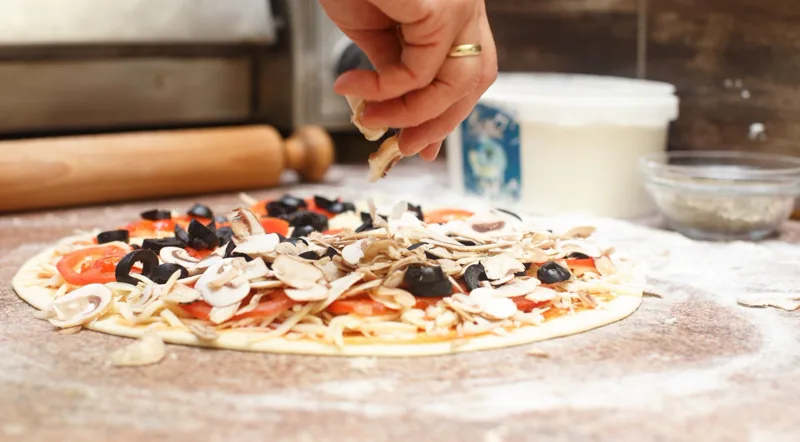
Stretching the baseYou'll press and stretch the dough by hand, working from the centre outward and leaving a thicker rim. Good schools discourage the rolling pin for round pizza, since pressing with a pin degasses the dough and flattens the airy structure.
Saucing and toppingYou'll spread sauce — rossa (crushed tomato) or bianca (just oil) — and choose toppings. The chef will usually preach restraint: too many wet toppings make the base soggy.
Baking and eatingA wood-fired Neapolitan-style pie can cook in 60–90 seconds at blistering heat; Roman-style or electric-oven bakes run longer and lower to dry the base to a crisp. Then you sit down and eat, usually with wine, beer or soft drinks included.
Most schools send you home with a recipe booklet or a "diploma." Want the bigger picture first? Our hub guide to cooking classes in Rome compares pizza, pasta and dessert-focused experiences side by side.
Roman vs Neapolitan Pizza: The Difference That Shapes Your Class
Understanding this distinction helps you choose a class and sound like you know what you're doing at dinner.
Neapolitan pizza (pizza napoletana)
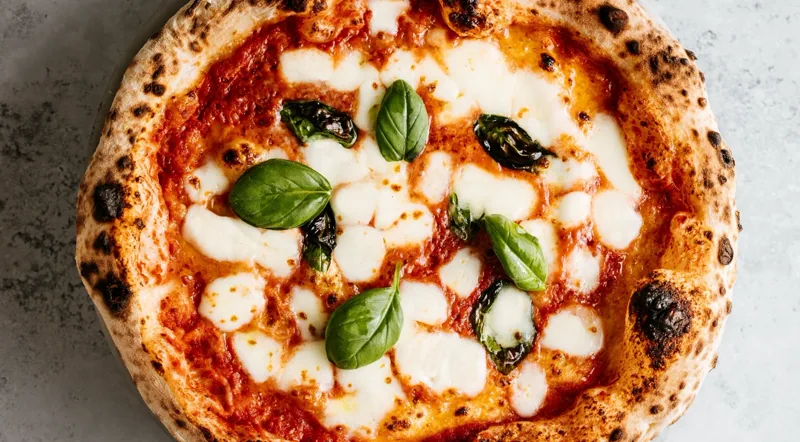
Born in Naples, this is the soft, pillowy, foldable pizza with a puffy, leopard-spotted cornicione (raised rim). Its dough is just flour, water, salt and yeast — no oil, no fat, no sugar — fermented 8–24 hours and baked in a wood-fired dome oven at high heat for just 60–90 seconds. It's fiercely protected: the Associazione Verace Pizza Napoletana (AVPN) was founded in Naples in 1984, and the EU granted pizza napoletana Traditional Speciality Guaranteed (TSG) status in 2010. In 2017, UNESCO inscribed the "Art of the Neapolitan Pizzaiuolo" on its Intangible Cultural Heritage list. Only two classic types qualify at the strictest level: the marinara (tomato, garlic, oregano, oil, no cheese) and the margherita (tomato, mozzarella, basil, oil).
Roman pizza (two styles)
Pizza tonda romana is the round, sit-down pizza: thin, crisp and rigid — the scrocchiarella, "the crunchy one." Unlike Neapolitan dough, Roman bakers cut the water and add a glug of olive oil, which lets the dough stretch thinner and bake up crispier, typically at a lower temperature so the base dries and crunches.
Pizza al taglio (also called pizza in teglia) is Rome's rectangular, by-the-slice tray pizza — sold by weight, cut with scissors, eaten on the go. It uses a very high-hydration dough and long fermentation to create a light, airy, honeycomb crumb with a crisp bottom, a style elevated to a gourmet art form by baker Gabriele Bonci at Pizzarium in Rome's Prati neighbourhood.
What your class will teach
Most Rome classes teach Roman-style pizza (tonda or teglia) because that's the local tradition, though many chefs explain and even demonstrate the Neapolitan method too. If mastering the puffy Naples style is your goal, look for a class with a real wood-fired oven and explicit Neapolitan billing.
Pizza tonda romana — thin, crisp and rolled flat, with little to no puffy rim.
Other experiences you might enjoy
Worth adding to your itinerary
Pair your pizza class with the rest of Rome: a Trastevere food and wine walking tour, a Colosseum and Roman Forum tour, a Vatican Museums and Sistine Chapel tour, or a day trip to Naples if the puffy Neapolitan style has you curious about the original. Here's a live feed of other top-rated Rome tours and experiences worth adding to your trip.
This site contains affiliate links. We may earn a commission when you book through our links at no extra cost to you.
A Little Technique: Flour, Hydration, Fermentation
A good class will slip in the science, and it's worth knowing before you go:
"00" flour is finely milled Italian soft-wheat flour — the "00" refers to how finely it's ground, not its protein level. Its fineness gives a softer, puffier crust and lets you stretch thin without tearing.
Hydration is the ratio of water to flour. Neapolitan dough sits around 55–62%; Roman al taglio can run 70–85%+, which creates that open, bubbly crumb.
Fermentation is where the flavour happens — enzymes and yeast break down starches and gluten over hours, producing a more relaxed, extensible dough that stretches without snapping back.
Wood-fired heat matters because Neapolitan dough is engineered for a fast, extremely hot bake — around 485°C for 60–90 seconds. A home oven maxing out around 250°C takes 8–12 minutes and comes out drier and denser.
Class Formats and What's Included
Group / shared classes
The most common and best-value option: small groups, often capped around 10–15, at your own or a shared workstation, with a convivial sit-down meal afterward. Great for solo travellers and social types.
Top pick for group classes
Traditional Pizza Cooking Class near Piazza Navona
★★★★★Rated 4.7 out of 54.7·1,300 reviews·€35·2 hoursFree cancel · 24h
One of Rome's best-value, most-reviewed pizza classes — 1,300 reviews — making authentic Roman-style pizza from scratch at the charming Osteria Pasquino, with a welcome prosecco, bruschetta and a drink included.
Roman-style pizza made from scratch
Welcome prosecco and a bruschetta starter
Glass of wine or a small beer
Coffee or a limoncello to finish
Check live prices and today's availability for this class.
You, your party and a dedicated chef — more flexible on menu, pace and dietary needs, and ideal for special occasions. Premium operators cap private classes very small for personal attention. Couples classes are marketed heavily as a relaxed, romantic "date night" format, often with wine flowing throughout.
Family classes
Pizza classes are arguably the single best cooking activity for kids in Rome. Look for classes that provide child-friendly tools and adapt the pace for little ones.
Top pick for families
Pizza, Gelato & Fun – a Tasty Class in the City Center
★★★★★Rated 4.9 out of 54.9·205 reviews·€41·1.5 - 3 hoursFree cancel · 24h
A hands-on pizza class steps from Piazza Venezia with a gelato-making demonstration — make your own pizza from scratch with a pizzaiolo, learn gelato technique, and leave with a certificate and a recipe booklet. Built to work for all ages.
Hands-on pizza making from scratch
Gelato-making demonstration
Dinner with wine (soft drinks for children)
Graduation certificate and digital recipe booklet
Check live prices and today's availability for this class.
Opens on GetYourGuide · free cancellation up to 24 hours before
Combo classes
Pizza + gelato is extremely popular — while your dough rests, you learn to make (or watch a demonstration of) fresh gelato, then eat both. Perfect for families and a strong warm-weather pick. Pizza + tiramisù is also common — see our Pasta + Tiramisù classes for the dessert-focused combo format. A handful of classes add supplì, the local fried rice-and-mozzarella croquette, or pair the class with a Trastevere street-food walk.
Top pick for pizza + gelato
Rome Pizza & Gelato Cooking Class
★★★★★Rated 4.8 out of 54.8·68 reviews·€55·2 hoursFree cancel · 24h
Start with a hands-on gelato workshop, then craft your own pizza with Roman techniques and a professional chef near Piazza Navona. A family-friendly class with wine, your handmade gelato and a final limoncello.
Hands-on gelato-making session
Hands-on pizza-making class
Glass of wine or soft drink, plus limoncello
Indoor cooking station near Piazza Navona
Check live prices and today's availability for this class.
Most classes include an apron, all ingredients and equipment, drinks (wine, beer, prosecco or soft drinks), the meal of what you made, and a take-home recipe booklet. Quick pizzeria sessions run about an hour; the standard pizza-and-gelato or pizza-and-tiramisù class runs 2 to 3 hours.
Best neighbourhoods for a pizza class
Trastevere is Rome's most atmospheric, cobblestoned neighbourhood and a hub for pizza classes, often paired with a street-food walk. Centro Storico (Piazza Navona, the Pantheon, Campo de' Fiori) is packed with classes in beautiful settings, easy to slot between sightseeing. Near the Colosseum and Monti is convenient if you're basing your day around ancient Rome. Prati, near the Vatican, is home to Bonci's landmark Pizzarium if you want to combine a class with a slice pilgrimage.
How much does it cost?
Shared/group classes typically run €35–€115 per person depending on inclusions and how central the operator is; private classes run roughly €200–€450+ for the group. Always check exactly what's included — some cheaper classes charge extra for drinks, while premium ones bundle unlimited wine, antipasti, dessert and recipe books.
Kids, Dietary Needs & Booking Tips
Pizza is the ideal kids' cooking activity: tactile, forgiving, and it ends in a food they already love. Several operators run dedicated family classes with child-safe tools, kid-friendly pacing, soft drinks for children and wine for adults. Reviews repeatedly describe classes working well for kids from about age 5 up.
Vegetarian is the easiest — a classic margherita or veg-topped pizza is inherently vegetarian.
Vegan is usually straightforward — pizzas can be made vegan by excluding the cheese, with vegetable toppings and dairy-free options. Flag it when you book.
Gluten-free is the trickiest. Specialist schools run dedicated gluten-free pizza classes, but standard shared classes are full of airborne flour and most can't guarantee against cross-contamination — book a dedicated class if you have celiac disease.
Booking & language
The vast majority of tourist-facing classes are taught in English, with other languages available on request for private bookings. Popular classes book out weeks in advance, so reserve early, especially for peak season and evening slots.
Recent traveller reviews
Reviews sourced verbatim from each class's GetYourGuide listing as of 2026-07. We do not edit or solicit reviews.
★★★★★
We loved learning how to make pizza! It was a great class and our kids enjoyed learning to make the pizza, and eating it!
Colleen · United States · Nov 26, 2025
★★★★★
This activity was the most fun we had in Rome! Easy to find, the guide was great. We made friends with the other people there.
Tina · United States · Nov 21, 2025
★★★★★
Great cooking class with Leonardo. Super easy to follow along and great tasting pizza in the end :) I recommend.
Amy · United States · Apr 23, 2026
★★★★★
We had an incredible time in the cooking class. The chefs made the experience so enjoyable, and the food turned out delicious. Highly recommend!
Mallory · United States · Nov 23, 2025
Frequently asked questions
Do you make dough from scratch in a Rome pizza class?
Yes — but with a twist. You'll almost always mix and knead a fresh batch of dough from scratch to learn the technique and take the recipe home. But because good pizza dough needs many hours, often a full day or more, to ferment properly, the dough you actually shape, top and eat is usually one the school proofed in advance. This is standard practice and the only way to bake a genuinely good pizza within a single class.
What's the difference between Roman and Neapolitan pizza?
Roman pizza comes in two forms — tonda (thin, crisp, round, made with olive oil in the dough) and al taglio (rectangular, by-the-slice, focaccia-like, high-hydration). Neapolitan pizza is soft and puffy with a charred, airy rim, made with no oil, baked 60–90 seconds in a very hot wood-fired oven, and protected by strict AVPN and EU STG standards. In short: Roman is crunch and structure, Neapolitan is soft, chewy and folded.
Can I make Neapolitan-style pizza in a Rome class, or only Roman?
Most Rome classes teach Roman-style pizza, since that's the local tradition, though many chefs explain and sometimes demonstrate the Neapolitan method too. A handful of classes explicitly bill themselves as Neapolitan. If mastering the puffy Naples style is your specific goal, look for a class with a real wood-fired oven and Neapolitan billing.
Are pizza making classes in Rome good for kids?
Very. Pizza is one of the best hands-on activities for children in Rome — they knead dough, pick their own toppings, and love watching pizzas bake. Many operators run dedicated family classes with child-safe tools and kid-friendly pacing, typically great for ages 5–6 and up.
How long is a pizza making class in Rome?
Most run 1.5 to 3 hours. Short pizzeria sessions can be about an hour, while the popular pizza-and-gelato or pizza-and-tiramisù combo classes usually last 2 to 3 hours including the meal.
How much does a pizza making class in Rome cost?
Shared group classes on this site run from about €35 to €55 per person. Private classes elsewhere typically run €200–€450+ for the group depending on inclusions, duration and party size. Children often get a discount in family classes. Confirm the current price and exactly what's included when you book.
Book your Rome pizza making class with free cancellation
A pizza making class is one of the most rewarding few hours you can spend in Rome — you'll eat well, learn a real skill, and take home the recipe. Every class on this site books through GetYourGuide with the same protections.
Free cancellation up to 24 hours before the class starts
Instant confirmation and a mobile voucher — no printing
Local chefs, English-language classes, from €35 per person