Pasta makingFettuccine · Tonnarelli · Ravioli€37–€129Free cancellationUpdated 10 min read
Pasta Making Class in Rome: The Complete Hands-On Guide
What happens step by step, which pasta shapes and sauces you'll learn, class formats and prices, the best neighbourhoods, dietary options, and the technique details that separate a great class from a forgettable one.
There's no better souvenir from Rome than the ability to make fresh pasta with your own two hands.
RC
Rome Cooking Class — editorial team
Compiled from GetYourGuide partner data across Rome's pure-pasta and pasta-combo classes, July 2026.
What Actually Happens in a Rome Pasta Making Class
Most pasta classes in Rome follow a similar, satisfying arc. You'll typically meet your chef at a cooking studio, a real restaurant kitchen, or a Roman's home, usually starting with a welcome glass of prosecco and a few antipasti while the group gets acquainted. Then the real work begins, and it is genuinely hands-on: you do everything yourself, from mixing and kneading to rolling, cutting, shaping and finally cooking.
Top pasta pick · from €59
Check live availability and prices for this tour on GetYourGuide. Pоwered by GetYourGuide.
Making the doughYou'll mound the flour on a wooden board, create a well in the centre, crack in eggs (for egg pasta) or add warm water (for semolina pasta), and gradually pull the flour into the liquid until a shaggy mass forms.
KneadingThis is where the magic happens — kneading develops the gluten that gives pasta its structure and bite. You'll work the dough until it turns smooth and springy.
RestingThe dough is wrapped and left to rest for around 30 minutes. This step is non-negotiable for good pasta.
RollingUsing a rolling pin (the traditional mattarello) or a hand-cranked pasta machine, you'll roll the dough into thin sheets.
Cutting or shapingDepending on the shape, you'll cut ribbons, press dough over a chitarra, or fill and seal ravioli.
Cooking and eatingFresh pasta needs only a couple of minutes in boiling salted water — the chef helps you cook and dress it, then you feast.
Classes usually finish with take-home recipes so you can recreate everything in your own kitchen. Want the full lay of the land first? Our hub guide to cooking classes in Rome compares pasta, pizza and dessert-focused experiences side by side.
The Fresh Pasta Shapes You'll Learn to Make
Rome's pasta classes lean on a handful of classic shapes, chosen because they're achievable for beginners and deeply tied to Roman and central-Italian tradition.
Fettuccine
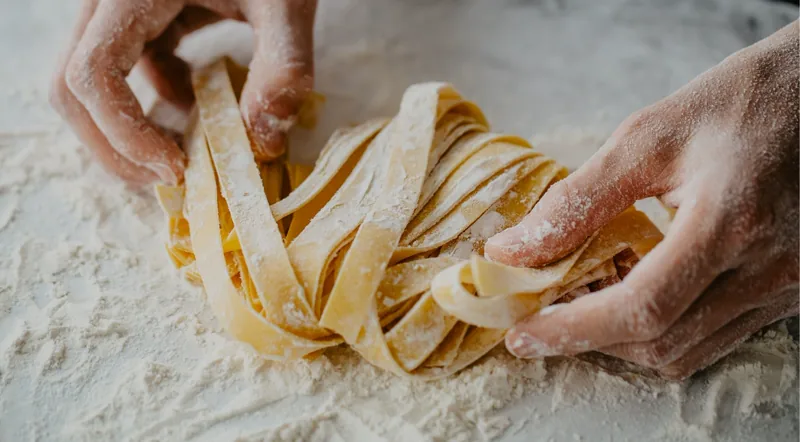
The most commonly taught shape — long, flat ribbons, slightly narrower than their northern cousin, tagliatelle. Fettuccine are the gateway shape for anyone learning to roll and cut fresh egg pasta.
Tonnarelli — the Roman shape for cacio e pepe
Square-cut fresh pasta, essentially Rome's version of spaghetti alla chitarra. It's cut using a chitarra — a wooden frame strung with metal wires — and that square edge and slightly rough surface is exactly why tonnarelli grips a sauce like cacio e pepe so beautifully.
Ravioli (and other stuffed pasta)
Filled pasta is a class favourite. You'll roll two thin sheets, pipe or spoon a filling — classically ricotta and spinach — in evenly spaced mounds, then press out the air and seal carefully before cutting. Keep the filling dry and expel trapped air, or your ravioli will burst in the pot.
Tagliatelle, gnocchi and others
Some classes teach tagliatelle (slightly wider ribbons) or gnocchi, the pillowy potato dumplings Romans traditionally eat on Thursdays. A few operators also cover orecchiette, cavatelli or farfalle, especially in family classes with kids.
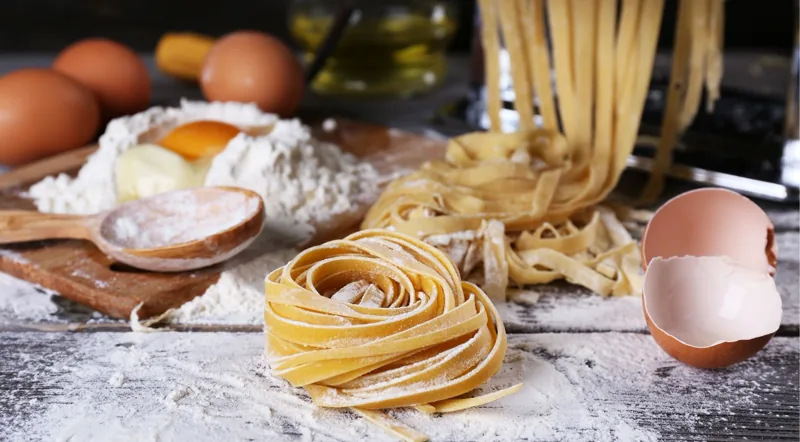
Eggs, flour and a pasta machine — every pasta class starts from the dough up.
Egg pasta vs. semolina-water pasta
Understanding this one difference will make you sound like a pro. Fresh pasta comes from two basic doughs:
Egg pasta — "00" flour plus eggs. A tender, silky, pliable dough, ideal for ribbons and filled shapes, and the northern and central-Italian tradition.
Semolina-water pasta — coarse durum-wheat semolina plus water, no eggs. A sturdier, chewier dough that holds hand-formed shapes like orecchiette — and it's naturally vegan.
Many chefs blend the two, adding a spoonful of semolina to an egg dough for extra "bite." For the finished dishes themselves, see our companion coverage of the Pure Pasta Masterclass classes on this site.
Other experiences you might enjoy
Worth adding to your itinerary
Once you've mastered fettuccine and tonnarelli, round out your Rome trip with a Vatican Museums and Sistine Chapel tour, a Colosseum and Roman Forum tour, a Trastevere food and wine walking tour, or a day trip to Frascati's vineyards. Here's a live feed of other top-rated Rome tours and experiences worth adding to your trip.
This site contains affiliate links. We may earn a commission when you book through our links at no extra cost to you.
The Roman Sauces You'll Pair With Your Pasta
Rome's four iconic pasta sauces are built on a shared foundation of pecorino romano cheese, and understanding how they relate is half the fun.
Cacio e pepe — pecorino romano, black pepper, pasta and starchy pasta water, emulsified into a glossy sauce. No cream, traditionally served with tonnarelli.
Gricia — cacio e pepe plus crispy guanciale; often called "white amatriciana" and considered the oldest of the four.
Amatriciana — gricia plus tomato, giving a bright, hearty red sauce classically served with bucatini.
Carbonara — gricia plus egg, whisked into a creamy, never scrambled sauce. The newest of the quartet, with a post-war origin.
Good to know
Because we have a dedicated breakdown, we'll keep it brief here — read the full history and technique in our guide to the four Roman pastas.
Class Formats: Find the Right Fit
Rome's pasta scene caters to every kind of traveller.
Group classes
The default and most affordable option. You'll join a small group of fellow travellers and cook together in a lively, social setting. Groups are deliberately kept small — many operators cap at 14 guests for genuine one-on-one attention from the chef.
Top pick for group classes
Top Pasta Making &Wine Dessert Limoncello by Pantheon
★★★★★Rated 4.9 out of 54.9·3,357 reviews·€59·3 hoursFree cancel · 24h
Rome's most-reviewed pure-pasta class — 3,357 reviews at 4.9 — teaching three fresh pasta shapes with a team of instructors inside Palazzo Grazioli, two minutes from the Pantheon, finished with organic Tuscan wine, limoncello and dessert.
Three fresh pasta shapes with a team of instructors
Sit-down meal of your own pasta
Organic Tuscan wine
Limoncello and dessert to finish
Check live prices and today's availability for this class.
Opens on GetYourGuide · free cancellation up to 24 hours before
Pasta + tiramisù combo classes
By far the most popular format in Rome. You'll make fresh pasta and assemble a classic tiramisù — typically building the tiramisù first so it can chill while you cook. It's an efficient way to master a full Italian meal in one sitting.
Rome's most-reviewed class
Pasta & Tiramisu Class with Fine Wine by the Vatican
★★★★★Rated 4.9 out of 54.9·5,740 reviews·€25·2.5 - 3 hoursFree cancel · 24h
Rome's single most-reviewed cooking class — 5,740 reviews at 4.9 — and it earns it: handmade pasta and tiramisu from scratch with a local chef in a neighbourhood restaurant near the Vatican, with free-flowing fine wine and prosecco.
Learn how to make handmade pasta from scratch
Create your own traditional tiramisù
Free-flowing fine wine and prosecco
Unlimited soft drinks and water
Check live prices and today's availability for this class.
Book privately for a celebration, honeymoon, or family trip and the chef tailors the pace and menu to you. Private classes are ideal for couples marking an anniversary, families with young children, or anyone with specific dietary needs.
Most intimate option
Pasta e Tiramisù Class in a Roman Home in Trastevere
★★★★★Rated 5.0 out of 55.0·108 reviews·€129·3 hoursFree cancel · 24h
An all-in private experience in a real Roman family home in Trastevere: chef Ilaria welcomes a maximum of eight guests for fettuccine, ravioli and orecchiette, her family tiramisù recipe and a welcome aperitivo.
Hands-on class inside a real Roman home
Fettuccine, ravioli and orecchiette from scratch
Welcome aperitivo with wine throughout
Small group — maximum 8 guests
Check live prices and today's availability for this class.
Opens on GetYourGuide · free cancellation up to 24 hours before
Pasta + gelato and market-to-table classes
Some classes finish with a gelato demonstration, or you make seasonal gelato yourself. Others begin with a guided visit to a market such as Campo de' Fiori or Testaccio, where you shop for seasonal ingredients with your chef before cooking a multi-course meal.
Also recommended
Trastevere Pasta-Making Class with Food Tour
★★★★★Rated 4.9 out of 54.9·35 reviews·€83·3 hoursFree cancel · 24h
The only class here that is also a food tour: shop with a butcher in Trastevere, sample porchetta, make ravioli and pasta chitarra at a trattoria, then finish at an organic gelateria.
Pasta-making class with a guided food tour
Shop for fresh ingredients with your chef
Wine for adults, alternatives for kids
Gelato tasting to finish
Check live prices and today's availability for this class.
Opens on GetYourGuide · free cancellation up to 24 hours before
Prefer dough of a different kind? Our pizza making class in Rome guide covers the wood-fired alternative, and no Roman food day is complete without gelato in Rome.
Duration, Neighbourhoods & Dietary Options
Typical duration2.5–4 hours
Group size6–14 guests
Price range€37–€129
Best neighbourhoodTrastevere
Most Rome pasta classes run 2.5 to 4 hours, including the sit-down meal at the end. Typical inclusions are generous: an apron and all equipment, fresh ingredients, wine or prosecco, the full meal you cook, and take-home recipes as a digital PDF.
Best neighbourhoods for a pasta class
Trastevere is the default choice — the atmospheric, cobblestoned neighbourhood across the Tiber has the right kitchens and is walkable from most central accommodation. Centro Storico (Piazza Navona, the Pantheon, Campo de' Fiori) puts you steps from Rome's icons, and market-to-table classes often start at the Campo de' Fiori market. Monti, beside the Colosseum, is convenient if you're basing your day around ancient Rome.
Dietary options: vegetarian, vegan & gluten-free
Vegetarian. Widely available — ricotta-and-spinach ravioli and tomato-based sauces are naturally meat-free.
Vegan. Semolina-water pasta contains no eggs, so it's naturally vegan — a genuine part of Italian tradition. Confirm in advance, since many standard group classes use egg pasta and dairy.
Gluten-free. A growing niche, with dedicated classes run in kitchens set up to avoid cross-contamination. Standard group classes generally can't safely accommodate celiacs, so seek out a specialist.
Whatever your diet, always flag it when booking. For dedicated options, see our guide to gluten-free and vegan cooking classes in Rome.
How to Choose & What to Bring
Prioritise hands-on classes. The best experiences have you doing every step yourself, not watching.
Check the group size. Smaller groups (10–14 or fewer) mean more attention from the chef.
Match the menu to your goals. Want the true Roman experience? Look for tonnarelli and cacio e pepe. Want a full meal? Choose a pasta-plus-tiramisù or multi-course class.
Read recent reviews for the chef's warmth and teaching quality.
Confirm inclusions — wine, the meal, recipes and apron — and dietary flexibility before you pay.
What to wear and bring
Wear clothes you don't mind getting floury — aprons are almost always provided.
Closed-toe, non-slip shoes are safest in a working kitchen.
Tie back long hair and skip dangly jewellery.
Come hungry — ingredients, equipment and recipes are supplied.
Can beginners really do this?
Absolutely, and that's the point. No prior experience is needed — the chef guides you through every step, and the shapes taught are chosen precisely because they're achievable on your first try. Kids typically love it too.
The Technique That Makes You Authoritative
Want to actually get better, not just have fun? These are the technique points a good chef will teach you.
"00" flour vs. semolina
"00" refers to the fineness of the grind, not the protein level — it's milled as fine as talcum powder, so it hydrates almost instantly with egg to create silky, roll-able dough. Semolina, milled from hard durum wheat, is coarser and higher in protein, giving structure and a firmer bite.
Why resting the dough matters
Skipping the rest is the most common beginner mistake. Kneading builds a tight gluten network; resting for around 30 minutes lets that gluten relax so the dough rolls out smoothly instead of springing back and tearing.
Using a chitarra
The chitarra is Rome's signature tool: a wired wooden frame that cuts a rolled sheet into square-edged tonnarelli. You let the sheet dry slightly, lay it over the strings, and press with a rolling pin — the strands drop through with a faint musical hum, which is why some call it "the pasta that sings."
Rolling by hand vs. machine
Hand-rolling with a mattarello is the traditional skill and gives a slightly porous, sauce-grabbing texture, but it takes practice. A hand-cranked machine is more forgiving and consistent, and most classes use one — you'll likely try both.
Recent traveller reviews
Reviews sourced verbatim from each class's GetYourGuide listing as of 2026-07. We do not edit or solicit reviews.
★★★★★
Everything about it was excellent. We learned so much and it was a highlight of our time in Rome. We left the class with very full bellies, too!
Kaitlin · United States · Nov 29, 2025
★★★★★
Our cooking class with Chef Ilaria Sparla was, without a doubt, a highlight of our trip to Rome. She was a phenomenal and patient teacher, sharing not only recipes but also the stories behind the food.
Alan · United States · Nov 11, 2025
★★★★★
A great activity! Jasmin was really engaging and clearly knew how to make pasta. We visited a local store and sampled goods, without it feeling overly "touristy."
Jacqui · United Kingdom · Oct 5, 2025
★★★★★
Best thing to do in Rome or any vacation! The cooking experience and eating the food was excellent, but the best part was the fun and drinks we had with the most awesome staff ever!
Roberto · United States · Jan 6, 2026
Frequently asked questions
What pasta do you make in a Rome pasta class?
Most classes teach fresh egg pasta shapes — fettuccine and ravioli are the most common — and many also cover tonnarelli, the square-cut Roman shape traditionally served with cacio e pepe. Some classes include tagliatelle, gnocchi or hand-shaped shapes like orecchiette, and you'll usually pair your pasta with a classic Roman sauce.
How long is a pasta making class in Rome?
Most classes run between 2 and 4 hours, including the sit-down meal at the end. A typical class is around 3 hours; market-to-table and multi-course classes tend toward the longer end.
Are pasta making classes in Rome in English?
Yes. The vast majority of Rome's pasta classes are led by English-speaking chefs, and some operators offer additional languages on request. Always confirm the language when booking.
Can beginners take a pasta making class?
Definitely. Rome's pasta classes are designed for all skill levels and require no prior experience. The chef guides you step by step, and the shapes taught are beginner-friendly. Classes are also great for kids.
How much does a pasta making class in Rome cost?
Prices on this site run from €37 for a short group class to €129 for an all-in private home experience. Group classes are the most affordable, while private, couples and market-to-table classes cost more per person. Confirm exactly what's included — ingredients, wine, the meal and take-home recipes are usually part of the price.
What's the difference between egg pasta and vegan pasta?
Egg pasta is made from "00" flour and eggs, giving a tender, silky dough for ribbons and ravioli. Vegan pasta uses semolina flour and water only — no eggs — a traditional southern-Italian style that's naturally vegan and produces a sturdier, chewier pasta.
Do I need to book a pasta making class in advance?
Book well ahead for high season (roughly April–October), especially for evening and Saturday slots. A week or two ahead is often enough in the quieter late-fall and winter months. Every class on this page offers free cancellation up to 24 hours before, so there's no downside to booking early.
Book your Rome pasta making class with free cancellation
Whether you want an intimate private lesson, a lively group class, or a family afternoon the kids will never forget, there's a perfect class waiting — and every one on this site books through GetYourGuide with the same protections.
Free cancellation up to 24 hours before the class starts
Instant confirmation and a mobile voucher — no printing
Local chefs, English-language classes, from €25 per person