Cooking Classes in Rome: The Complete Guide to Pasta, Pizza & Roman Cuisine
Everything you need to choose the right class: the formats available, what happens in a typical session, the best neighbourhoods, the dishes you'll learn, prices, and how to book a class that runs in English and fits your dietary needs.
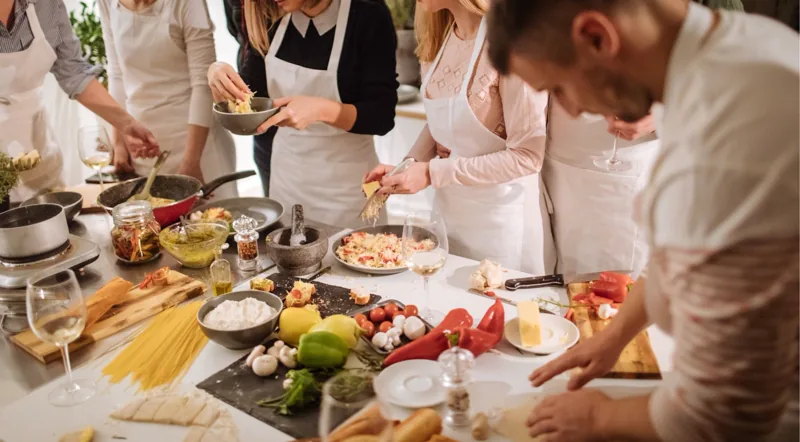
A cooking class in Rome ends the same way every time — a sit-down meal of everything you made, with wine.
RC
Rome Cooking Class — editorial team
Compiled from GetYourGuide partner data across 31 Rome cooking classes and a Rome cooking-class research brief, July 2026.
Why take a cooking class in Rome?
Romans will tell you that food here isn't just something you eat — it's tradition, family and daily ritual. A cooking class turns you from a spectator into a participant. Instead of admiring a plate of cacio e pepe at a trattoria, you learn why the sauce emulsifies, how to keep the eggs from scrambling in carbonara, and which flour makes the silkiest fettuccine.
Most-booked class · from €25
Check live availability and prices for this tour on GetYourGuide. Pоwered by GetYourGuide.
The best part: the skills come home with you. Nearly every reputable class sends you off with printed or digital recipes, and countless travellers report recreating their fettuccine and tiramisù for friends and family back home. Cooking classes also consistently rank among the highest-rated experiences in Rome, routinely carrying review scores in the high 4.8–4.9 range across thousands of reviews.
Pairing your cooking class with the rest of Rome is easy — a morning at the Vatican Museums, a Colosseum underground tour, a Trastevere food tour, a Testaccio market visit, or a day trip to Tivoli or Frascati all sit comfortably alongside a pasta, pizza or gelato class. Here's a live feed of other top-rated Rome tours and experiences worth adding to your trip.
This site contains affiliate links. We may earn a commission when you book through our links at no extra cost to you.
Types of Cooking Classes in Rome
Rome's cooking-class scene is remarkably varied. Here are the main formats you'll encounter, from the most popular to the most niche.
Pasta-Making Classes
The most popular and most traditional option. You'll make fresh pasta from scratch — mixing dough, kneading, rolling and cutting — then pair it with a classic Roman sauce. Most classes teach two shapes, often fettuccine plus a filled pasta like ravioli.
Top pick for pasta
Top Pasta Making &Wine Dessert Limoncello by Pantheon
★★★★★Rated 4.9 out of 54.9·3,357 reviews·€59·3 hoursFree cancel · 24h
Rome's most-reviewed pure-pasta class — 3,357 reviews at 4.9 — teaching three fresh pasta shapes with a team of instructors inside Palazzo Grazioli, two minutes from the Pantheon, finished with organic Tuscan wine, limoncello and dessert.
Pasta-making class with a team of instructors
Sit-down meal of your own pasta
Organic Tuscan wine
Limoncello and dessert to finish
Check live prices and today's availability for this class.
Relaxed and social, these classes teach you to work dough, stretch a base, add toppings and bake in a wood-fired oven. One thing to know: pizza dough needs many hours to rest and rise, so in shorter classes you'll usually shape pre-made dough the chef prepared earlier while learning to make fresh dough for practice.
Top pick for pizza
Traditional Pizza Cooking Class near Piazza Navona
★★★★★Rated 4.7 out of 54.7·1,300 reviews·€35·2 hoursFree cancel · 24h
One of Rome's best-value, most-reviewed pizza classes — 1,300 reviews — making authentic Roman-style pizza from scratch at the charming Osteria Pasquino, with a welcome prosecco, bruschetta and a drink included.
Roman-style pizza made from scratch
Welcome prosecco and a bruschetta starter
Glass of wine or a small beer
Coffee or a limoncello to finish
Check live prices and today's availability for this class.
Gelato and tiramisù workshops are hugely popular, often combined with a pizza or pasta class. You'll learn what makes gelato different from ordinary ice cream — far less fat, far less air, and served slightly warmer for a silkier texture. Tiramisù classes teach the savoiardi (ladyfinger) base and mascarpone cream, layered and chilled while you cook the rest of the meal.
Top pick for dessert
Pasta & Tiramisu Cooking Class Near the Vatican with Wine & Gelato
★★★★★Rated 4.9 out of 54.9·90 reviews·€45·3 hoursFree cancel · 24h
Both Italian desserts in one class: make fresh pasta and tiramisu with a local chef near the Vatican, with free-flowing wine and prosecco, then walk to a gelateria loved by locals for a scoop of the real thing.
Handmade pasta and tiramisu from scratch
Free-flowing fine wine and prosecco
Gelato tasting at a local gelateria
Expert local chef and restaurant setting
Check live prices and today's availability for this class.
These begin with a guided walk through a Roman food market — usually Campo de' Fiori or the Testaccio market — where your chef helps you choose seasonal ingredients before you head to the kitchen. This format connects you to how Romans actually cook: seasonally, and market-first. It's more immersive and usually longer than a standard class.
Combo Classes
Many classes bundle multiple dishes: pasta + tiramisù, pizza + gelato, or a full multi-course menu. These offer the most complete experience of Italian cooking in one session, and the pasta-plus-tiramisù combo is Rome's single best-selling format.
Rome's most-reviewed class
Pasta & Tiramisu Class with Fine Wine by the Vatican
★★★★★Rated 4.9 out of 54.9·5,740 reviews·€25·2.5 - 3 hoursFree cancel · 24h
Rome's single most-reviewed cooking class — 5,740 reviews at 4.9 — and it earns it: handmade pasta and tiramisu from scratch with a local chef in a neighbourhood restaurant near the Vatican, with free-flowing fine wine and prosecco.
Learn how to make handmade pasta from scratch
Create your own traditional tiramisù
Free-flowing fine wine and prosecco
Unlimited soft drinks and water
Check live prices and today's availability for this class.
Small-group classes (typically capped around 10–14 people) are social, good value, and let you meet fellow travellers.
Private classes give you one-on-one time with the chef, flexible pacing and a customisable menu — ideal for couples, special occasions or dietary needs.
Family classes feature kid-friendly menus and chefs experienced with children.
Couples classes and "date night" formats, often with wine, are widely available.
Most intimate option
Pasta e Tiramisù Class in a Roman Home in Trastevere
★★★★★Rated 5.0 out of 55.0·108 reviews·€129·3 hoursFree cancel · 24h
An all-in private experience in a real Roman family home in Trastevere: chef Ilaria welcomes a maximum of eight guests for fettuccine, ravioli and orecchiette, her family tiramisù recipe and a welcome aperitivo.
Hands-on class inside a real Roman home
Fettuccine, ravioli and orecchiette from scratch
Welcome aperitivo with wine throughout
Small group — maximum 8 guests
Check live prices and today's availability for this class.
Opens on GetYourGuide · free cancellation up to 24 hours before
What to Expect: Typical Class Structure
While every operator differs, most Rome cooking classes follow a similar rhythm.
WelcomeYou arrive and are greeted with a glass of prosecco (or a non-alcoholic option) and often some snacks, along with introductions.
Hands-on cookingThe chef demonstrates each step, then you do it yourself — mixing dough, kneading, rolling, shaping and preparing sauces.
The mealEveryone gathers around a communal table to eat what they made, usually with wine and often finishing with limoncello or coffee.
Recipes to take homeYou'll receive the recipes, printed or digital, so you can recreate the dishes at home.
Typical duration2.5–4 hours
Group size6–14 guests
Hands-on levelFully hands-on
Classes compared31
Beware very short classes that promise a full multi-course meal in under 2 hours — reviewers note these can feel rushed and skimp on either the technique or the eating.
Popular Neighbourhoods for Cooking Classes
Location matters — pick a class near where you're staying or near the sights you're seeing that day.
Trastevere
Rome's most atmospheric food neighbourhood, with cobblestone streets, trattorias and a bohemian charm. Many of the best-loved classes are held here, often in intimate kitchens or real Roman homes — the private Trastevere home class above is the clearest example.
Centro Storico — Piazza Navona, Pantheon & Campo de' Fiori
The heart of Rome. Classes here are set in historic palazzos and central kitchens, convenient if you're sightseeing. Campo de' Fiori hosts Rome's most famous central open-air market, making it a natural launch point for market-to-table classes.
Near the Colosseum & Monti
Convenient if you're touring ancient Rome. Monti, just a short walk from the Colosseum, has a residential, cozy feel and hosts several well-reviewed pasta and pizza classes throughout the day.
The Jewish Ghetto & Testaccio
The Ghetto is known for Roman-Jewish specialities like carciofi alla giudia (fried artichokes). Testaccio, Rome's historic food quarter, is home to a superb covered market where many chefs actually shop.
Wherever your class is held, it ends the same way — everyone eating what they made together.
What Dishes Will You Learn?
The Four Classic Roman Pastas
Rome's pasta identity rests on four dishes built from a handful of shared ingredients — guanciale, pecorino romano, black pepper, eggs and tomato:
Cacio e pepe — pecorino and black pepper emulsified with starchy pasta water. No meat. Deceptively hard to perfect.
Gricia — cacio e pepe plus guanciale; often called "white amatriciana." The oldest of the four.
Amatriciana — gricia plus tomato, traditionally served with bucatini.
Carbonara — gricia plus egg yolk, no cream, ever. The newest of the quartet, dating to the 1950s.
Fresh Pasta Shapes
Classes most commonly teach fettuccine, tonnarelli (the classic Roman shape for cacio e pepe, cut on a chitarra), and ravioli. For the full shape-by-shape breakdown — plus the technique that separates a great pasta class from a forgettable one — see our dedicated Pasta Making Class in Rome guide.
Pizza, Antipasti & Desserts
Roman-style pizza (thin, crisp) versus Neapolitan (puffy, charred) is its own discipline — see our Roman pizza classes for the difference explained. Some classes, especially private or multi-course ones, also teach Roman starters like supplì, bruschetta and fried zucchini flowers, plus desserts — tiramisù, gelato, sorbet and sometimes cannoli.
Practical Booking Information
Are Cooking Classes in Rome in English?
Yes — the vast majority of Rome cooking classes aimed at visitors are conducted in English, led by chefs who speak it fluently. Many operators also offer classes in Italian, and private classes can sometimes be arranged in other languages on request. Always confirm the class language when booking.
Vegetarian: Most standard group classes readily accommodate vegetarians with advance notice.
Vegan: Standard mixed-group classes often can't fully accommodate vegans, but dedicated plant-based classes exist as private or specialist experiences.
Gluten-free / celiac: A handful of Rome classes offer certified celiac-safe options using dedicated equipment — book one designed for it rather than assuming a regular class can adapt.
Be honest with yourself here
Because policies vary sharply, always disclose allergies and dietary needs before booking, and choose a class built for your needs when the restriction is severe.
Family-Friendliness
Many classes welcome children and some are specifically designed for families, with kid-friendly menus — pizza-shaping and gnocchi are favourites — and chefs experienced with kids. For very young children, a private class is often the best choice so the pace can adapt.
Wine & When to Book
Wine is included in most classes — typically two to three glasses, though some advertise "free-flowing" or "unlimited" wine. Classes frequently sell out, especially in summer. Book 2–3 months ahead for summer travel; a few weeks is usually fine in the quieter late-fall and winter months. Look for free cancellation, commonly up to 24 hours before.
How to Choose the Best Cooking Class in Rome
With so many options, focus on these markers of a genuine, worthwhile experience:
Local chef instruction. The best classes are led by Romans, or long-time residents, who grew up with these recipes.
Genuinely hands-on. Confirm you'll be cooking, not just watching.
Small group size. Fewer participants means more attention.
At least 3 hours. Enough time to learn and eat properly.
Clear inclusions. Ingredients, wine, recipes and a sit-down meal should be spelled out.
Recent, consistent reviews. Look for detailed, recent five-star reviews mentioning the chef by name.
Convenient, verified location. Double-check the meeting point before booking.
What to bring and wear: comfortable closed-toe shoes, clothes you don't mind getting floury, a hair tie for long hair, and your appetite.
Recent traveller reviews
Reviews sourced verbatim from each class's GetYourGuide listing as of 2026-07. We do not edit or solicit reviews.
★★★★★
Irene did an amazing Job making it such a fun experience for my wife and I! The pasta and tiramisu was so easy to learn with Irene's help and guidance and the food was great!
George · United States · May 2, 2026
★★★★★
Ricarrdo was a great instructor! Very helpful and funny. Also made sure everyone got pictures. Pasta was delicious.
Laurel · United States · Nov 28, 2025
★★★★★
I cannot say enough about this activity. By far my favorite on our trip. The family was AMAZING and the food even better.
Monica · United States · Nov 9, 2025
★★★★★
Fun activity. My daughter really enjoyed it. It was supposed to last for 2 hours but it lasted for 45 minutes. The class was quick and straight to the point.
Kimberly · United States · Nov 24, 2025
Frequently asked questions
Are cooking classes in Rome taught in English?
Yes. The large majority of Rome cooking classes for visitors are taught in English by fluent, often local, chefs. Italian is commonly available too, and private classes can sometimes be arranged in other languages such as French, Spanish or Portuguese. Always confirm the language when you book.
What's the difference between a cooking class and a food tour in Rome?
A cooking class has you making the food yourself in a kitchen or restaurant, then eating what you made. A food tour has you walking between multiple stops — a market, a bakery, a deli — tasting food someone else prepared. A handful of market-to-table classes blend the two: a guided market visit followed by a hands-on cooking session, which is the closest Rome gets to combining both formats in one booking.
What do you actually cook in a Rome cooking class?
Most commonly, fresh pasta — fettuccine, tonnarelli or ravioli — paired with a classic Roman sauce like cacio e pepe, carbonara or amatriciana, plus a dessert such as tiramisù. Pizza and gelato classes are also widely available, and some classes teach Roman antipasti like supplì, bruschetta or fried zucchini flowers.
How much does a cooking class in Rome cost?
Group classes on this site run from €25 to about €90 per person, with most landing between €35 and €60. Pizza classes are the cheapest starting point; market-to-table and countryside classes cost more; private and home-based classes for couples or families run highest, up to €129. Wine and a full meal are almost always included in the price.
How long do cooking classes in Rome last?
Most run 2 to 3 hours, including the sit-down meal at the end. Pure pizza classes are the shortest at about 2 hours; home-based and market-to-table experiences can run 3 to 5 hours. Be cautious of very short classes (under 2 hours) that promise a full multi-course meal — reviewers note these can feel rushed.
Are Rome cooking classes family-friendly?
Many are. Pizza and Pasta + Gelato classes are the most kid-friendly formats, and several classes are designed specifically for families with kid-friendly menus and chefs used to working with children. For very young children, a private class is often the best choice so the pace can adapt. Check each listing's minimum age.
Can a Rome cooking class accommodate vegetarian, vegan or gluten-free diets?
Vegetarian requests are usually easy — tomato-based sauces and ricotta-and-spinach ravioli are naturally meat-free. Vegans and travellers with celiac disease should book a dedicated plant-based or certified gluten-free class rather than relying on a standard group class to adapt, since eggs, mascarpone and pecorino are central to most recipes. Always disclose dietary needs before booking.
How far ahead should I book a Rome cooking class?
Book 2–3 months ahead for summer travel (June–August), especially for Saturday and evening slots. A few weeks is usually fine in the quieter late-fall and winter months. Every class on this site offers free cancellation up to 24 hours before, so booking early and adjusting later carries no risk.
Pick a format, compare the highest-rated classes in it, and lock in a date. Every class on this site books through GetYourGuide, so you keep the same protections whichever one you choose.
Free cancellation up to 24 hours before the class starts
Instant confirmation and a mobile voucher — no printing
Local chefs, English-language classes, from €25 per person